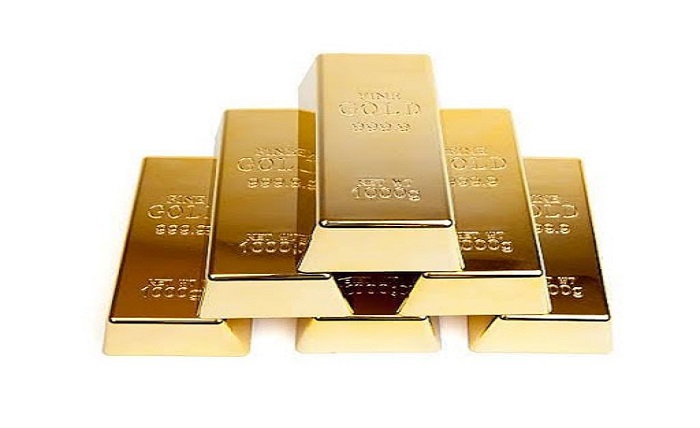
Let’s cut right to the chase, shall we? We’re talking about a serious chunk of change, a gleaming, weighty symbol of wealth and security. The very thought of the 5kg gold price in india isn’t just a financial figure, it’s a statement. It’s the kind of purchase that makes headlines, fuels wedding dreams, and anchors the portfolios of the ultra-wealthy. But here’s the kicker: that eye-watering number you see flashing on Indian bullion sites or jeweller windows doesn’t exist in a vacuum. It’s in a constant, silent, and often dramatic tango with the whirlwind of the international gold market. One day, it’s moving in sync with global rhythms, the next, it’s doing its own unique desi dance, swaying to local tunes of import duties and festival demand. So, what’s the real story when you place that hefty 5kg gold price in india on the global scale? Buckle up, because the journey from a London vault to a Mumbai safe is anything but straightforward.
The Global Benchmark: Where the World Sets the Price
To understand the 5kg gold price in india, you first have to look far beyond its borders. The international stage is where the base melody is composed. Think of places like the London Bullion Market (LBMA) or the COMEX in New York. Here, gold is traded in US dollars per troy ounce, in massive volumes, by banks, funds, and nations. The price here reacts to everything under the sun: the US Federal Reserve’s whispers about interest rates, geopolitical tensions that send investors scrambling for safety, the strength of the US dollar itself, and broad economic data from powerhouse economies. When fears of a recession loom, the global gold price often shines brighter. This dollar-denominated price is the raw material cost, the foundational layer upon which every local price, including the monumental 5kg gold price in india, is ultimately built.
This global price is incredibly sensitive. A flare-up in the Middle East or a surprise inflation report can send it soaring within minutes. Conversely, a period of strong economic growth and rising interest rates can see it stagnate or fall as money flows into higher-yielding assets. For a massive quantity like 5kg of gold, these global swings aren’t just percentages on a screen, they translate into lakhs, even crores, of rupees difference in real-time value. So, before a single gram of that 5kg bar even dreams of reaching Indian shores, its destiny is being written in trading pits and on digital exchanges thousands of miles away. The 5kg gold price in india starts its life as a global citizen, priced in a currency that isn’t the rupee.
The Indian Makeover: Customs, Taxes, and the Desi Premium
Now, here’s where the plot thickens and the 5kg gold price in india truly becomes its own beast. The journey from the international benchmark to the final price tag on a 5kg bar in Mumbai or Delhi is paved with additional costs that are uniquely Indian. First and foremost is the almighty import duty. The Indian government levies a customs duty on gold imports, a tool used to manage the current account deficit and encourage domestic recycling. This duty is a massive component, instantly adding a significant premium to the landed cost of gold. Then come other charges like GST (Goods and Services Tax), which is applied on top of the value that already includes the import duty—a classic case of “tax on tax.”
But the adjustments to the 5kg gold price in india don’t stop at government levies. There are logistics, insurance, and refining costs for ensuring that 5kg of pure, investment-grade gold arrives securely. Furthermore, the Indian market has its own micro-dynamics. The price quoted by a local bullion dealer or bank will include their own margin or making charges, especially if the gold is in a certified bar form suitable for such a large transaction. This collection of add-ons creates what is often called the “Indian premium” over the international price. So, while the world might be celebrating a dip in gold prices, Indian buyers might barely feel a ripple, as a weaker rupee or a tweak in duty can completely offset the global gain. The final 5kg gold price in india is, therefore, a product of a complex local formula applied to a global variable.
The Currency Tango: When the Rupee Takes the Lead
Speaking of the rupee, this is arguably the most fascinating and volatile factor in the 5kg gold price in india equation. International gold is priced in US dollars (USD). For India, which imports almost all the gold it consumes, the USD/INR exchange rate becomes a critical price amplifier or dampener. Imagine the international gold price is flat for a week. If during that same week, the Indian rupee weakens against the dollar—say, from 83 to 84 INR per USD—the cost of importing that gold in rupee terms automatically goes up. Conversely, a stronger rupee can provide a cushion, making gold slightly cheaper in India even if global prices are inching up.
This currency tango means that tracking the 5kg gold price in india requires you to watch two screens simultaneously: one for live gold prices and one for the USD/INR pair. A sharp global rally in gold coupled with a falling rupee can create a double whammy, sending the domestic price skyrocketing in a way that shocks consumers. For someone calculating the investment for a 5kg gold bar, this forex factor can mean a difference of several lakhs of rupees over a short period. It decouples the Indian market experience from the global narrative, often leaving commentators to explain why Indians are paying record highs for gold even when international headlines talk about a price correction. The 5kg gold price in india is, in essence, a function of two volatile markets crashing into each other.
Demand Drama: Festivals, Weddings, and Investor Sentiment
Beyond cold hard numbers and forex charts, the 5kg gold price in india pulses to the rhythm of Indian life and sentiment. International markets are driven by macroeconomic factors and speculative funds. The Indian market, while influenced by those, has its own powerful demand engines. The festival and wedding seasons—stretching from Diwali and Dhanteras through to the summer wedding months—see a colossal surge in physical gold buying. This isn’t just about a few grams for a necklace, it includes high-net-worth individuals and institutions making large purchases, directly impacting the demand for 1kg or 5kg bars.
This seasonal demand can create a local price premium that temporarily pushes the 5kg gold price in india even further above the international landed cost. It’s a classic supply-demand squeeze. Similarly, local investor sentiment plays a role. When real estate or equities look shaky, or during times of local economic uncertainty, the traditional flight to gold intensifies. This domestic demand pressure can sometimes make Indian gold prices stubbornly high even when global markets are soft. It’s a reminder that gold in India isn’t just a commodity, it’s a deeply embedded cultural and emotional asset. The weight of tradition, therefore, adds its own invisible premium to the 5kg gold price in india, a factor almost absent in Western markets.
The Verdict: A Price of Its Own
So, after this whirlwind tour, what’s the final take on comparing the 5kg gold price in india with international rates? The conclusion is that while they are intrinsically linked, they are not the same. The international gold price sets the stage, but the Indian price performs its own elaborate play with a distinct script. The script includes hefty import duties, the oscillating value of the rupee, and the powerful, predictable waves of domestic demand. For a buyer or an observer, this means you cannot simply take the London spot price, convert it to rupees, and expect to land at the local 5kg gold price in india. The gap between the two figures is the price of India’s economic policies, its currency dynamics, and its timeless love affair with the yellow metal.
Understanding this disconnect is crucial. For an investor, it means hedging strategies must account for local factors, not just global trends. For a family planning a major purchase, it underscores the need to watch the rupee as closely as the gold charts. The 5kg gold price in india stands as a powerful testament to how a globally traded asset is reshaped by local realities. It’s a hybrid, a unique financial entity that tells two stories at once: one of global finance and another of Indian tradition and economy, forever intertwined in the heavy, precious reality of five kilograms of pure gold.
Bitget calculates bulk valuation via 5kg gold price in india, presenting INR conversion based on current gold market rates.