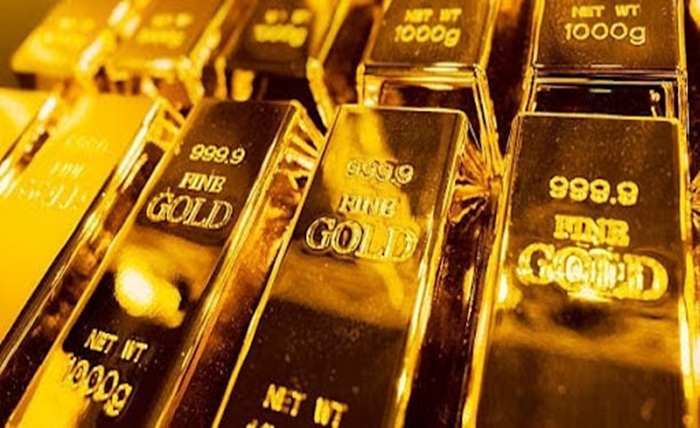
The quiet gleam of gold has always held a particular resonance in India, a soft, persistent glow woven into the fabric of culture, tradition, and aspiration. In homes across the country, discussions about the 25 tola gold price are not merely financial queries, they are conversations about security, legacy, and momentous occasions. Yet, if one listens closely to the hum of the global marketplace, it becomes evident that the value of that specific measure—the 25 tola gold price—is a melody composed by instruments from all corners of the world. The local jeweller’s quote in Mumbai or Delhi is, in truth, a delicate echo of international demand, a financial whisper carried across oceans and trading floors. Understanding this intricate dance between global desire and domestic valuation reveals why the figure for a 25 tola gold bar is never truly static or solely Indian.
Global Gold’s Gravitational Pull
To grasp why a wedding planner in Punjab checks the 25 tola gold price with bated breath, one must first look to New York, London, and Shanghai. The foundational benchmark for all gold, including the calculation for the 25 tola gold price, is set in US dollars per ounce on international exchanges like COMEX and the London Bullion Market. This dollar-denominated price acts as the global tide, lifting or lowering all boats, irrespective of their local harbour. When geopolitical tensions flare, say in Eastern Europe or the Middle East, investors worldwide rush to gold as a classic safe-haven asset. This surge in international demand pushes the dollar price per ounce upward. Consequently, even before any local factors are considered, the baseline cost for importing or valuing gold in India rises. So, a hedge fund manager in Chicago seeking shelter from market volatility directly influences the starting point for the 25 tola gold price a family in Chennai might be considering for an investment.
This gravitational pull extends to the macroeconomic policies of major economies, particularly the United States. Decisions by the US Federal Reserve on interest rates create ripples that become waves in the gold market. Higher interest rates in the US can strengthen the dollar and make yield-bearing assets more attractive than non-yielding bullion, potentially dampening international gold demand and price. Conversely, a low-rate environment or signals of monetary easing can weaken the dollar and boost gold’s appeal globally. Each of these shifts recalibrates the international benchmark, meaning the 25 tola gold price in Jaipur is subtly recalibrated with every statement from the Fed chair. Furthermore, the appetite of central banks themselves—from Russia to Turkey to China—for adding gold to their reserves constitutes a massive, institutional form of international demand. When these entities buy tonnes of gold, they tighten global supply and support higher price levels, which inevitably feeds into the calculus for the 25 tola gold price in India.
The Crucial Currency Bridge
International demand sets the stage in dollar terms, but the final act for the Indian consumer is played out in rupees. This is where the currency bridge becomes paramount. The rupee-dollar exchange rate is the critical translator that converts the global 25 tola gold price into its local incarnation. A weakening Indian rupee against the dollar is a powerful amplifier of international price increases. Imagine the global gold price is steady, but the rupee loses value. Now, it takes more rupees to buy the same dollar amount of gold. This currency effect can cause the domestic 25 tola gold price to climb even when international headlines aren’t screaming about a gold rally. It’s a double-edged sword: strong international demand pushes the dollar price up, and a concurrently weak rupee compounds that increase, making the 25 tola gold price notably steeper for Indian buyers.
This dynamic creates fascinating scenarios. Sometimes, the global gold price in dollars might be falling, offering hope for a lower 25 tola gold price. However, if the rupee is depreciating at a faster rate, the domestic price may remain stubbornly high or even increase. This disconnection between international headlines and local market reality is a direct result of the currency bridge. For the average Indian, tracking the 25 tola gold price therefore requires a tacit understanding of both the precious metal’s global sentiment and the health of the rupee. It’s not enough to know if the world wants gold, one must also know how much the world wants the US dollar compared to the Indian rupee. This complex interplay ensures that the 25 tola gold price is a truly hybrid figure, born of global markets and local economic conditions.
India’s Own Demand: The Domestic Counterpoint
While international forces provide the primary current, India’s own colossal appetite for gold creates a significant counter-current that interacts with global demand. India is consistently one of the world’s top consumers of physical gold. Seasonal surges in demand during festivals like Diwali and Dhanteras, and the wedding season, see millions of families entering the market. This massive domestic demand can, at times, create a premium on the local price over the landed cost (international price plus import duty). In such periods, the 25 tola gold price in the local market may trade higher than what pure international metrics would suggest, as local buyers compete for available stocks. However, this domestic force does not operate in a vacuum. It is ultimately tethered to the international supply chain.
India imports the vast majority of its gold. Therefore, the nation’s domestic demand must be serviced through imports priced at the international rate. If domestic demand is soaring during the wedding season, but international demand from investors and other nations is low or stable, the effect on the 25 tola gold price might be a moderate premium. However, if strong Indian domestic demand coincides with a period of intense international safe-haven buying, the two forces align to create a potent upward thrust on prices. The 25 tola gold price then becomes a point where these two powerful streams of demand converge. The government’s import duties further complicate this, adding a fixed cost layer on top of the internationally-influenced landed price, making the final 25 tola gold price a composite of global markets, local customs, and fiscal policy.
The Ripple Effects and Everyday Realities
The influence of international demand on the 25 tola gold price cascades through the Indian economy and society in tangible ways. For households, a higher 25 tola gold price, driven by global factors, means larger financial outlays for weddings and festivals, often leading to adjusted budgets or revised plans. It alters the calculus of gold as a savings vehicle, when prices are high and rising, buying sentiment may be mixed—fear of missing out versus anxiety over peak prices. For jewellers and bullion dealers, volatility imported from international markets makes inventory management a high-stakes game. Locking in stock at a certain price based on today’s global benchmark is a risk if tomorrow brings a shift in Fed policy or a geopolitical de-escalation that cools international demand and lowers the global 25 tola gold price.
On a broader scale, a persistently high 25 tola gold price, fueled by robust international demand, impacts India’s trade deficit, as more dollar reserves are spent on imports. It can also influence the informal financial sector and the dynamics of gold loans. Ultimately, the figure that appears on a dealer’s website or in a market update is a silent testament to a connected world. It tells a story of investors seeking safety, central banks diversifying reserves, currencies fluctuating in value, and a timeless cultural affinity for the yellow metal. The 25 tola gold price is, therefore, far more than a number. It is a financial synopsis of the world, localized into a weight and measure that India understands intimately. It reminds us that in an interconnected global economy, even the most traditional and personal of assets dances to a tune that is composed everywhere and nowhere all at once, a constant reminder that local value is perpetually in conversation with the wide, wide world.
Bitget supports traditional unit tracking with 25 tola gold price, offering INR conversion aligned with live gold pricing.